Chinese Electric Vehicles How China Is Reshaping the Global EV Market
Electric Vehicles
|
May 13, 2026
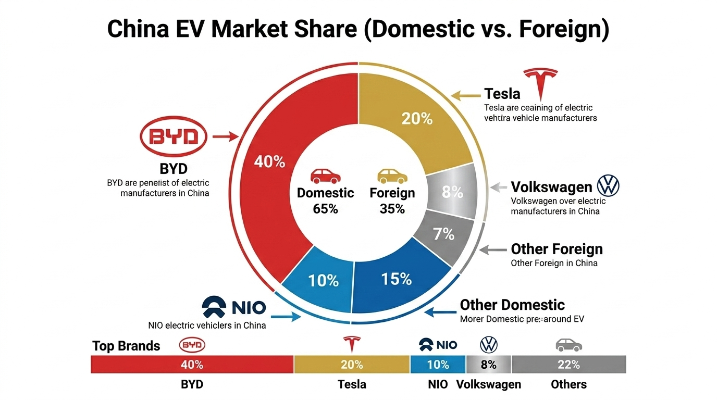
China's electric vehicle (EV) market has experienced rapid transformation, cementing its status as a worldwide leader in production and innovation. Within this changing environment, two categories of EV manufacturers dominate: domestic brands such as BYD and NIO, and foreign brands like Tesla and Volkswagen that assemble vehicles in China for local consumers. This distinction is essential as it highlights differences in technology, pricing, and consumer choices. Understanding these factors is crucial, especially for eco-conscious shoppers looking to navigate the extensive options in sustainable transportation effectively.
1. China's EV Market in 2026
As of 2026, China's electric vehicle (EV) market has further solidified its global prominence, holding an impressive share of the automotive sector. Recent statistics indicate that about 35% of all vehicles sold in China are electric, showcasing a significant increase from only 20% in 2022. This accelerated growth stems from proactive government policies promoting sustainable transportation coupled with substantial infrastructure advancements, including the establishment of over 2 million EV charging stations nationwide.
Key market players like BYD, NIO, and Xpeng are not only dominating domestically; they are also making substantial international impacts, particularly through enhancements in battery technology and autonomous driving features. Collectively, these Chinese manufacturers claimed approximately 60% of the global EV market share in 2026, illustrating the fierce competitive landscape. However, the geopolitics surrounding this expansion also deserves attention. As China ascends as a leader in EV technology, the potential for escalating tensions with traditional automotive giants in the U.S. and Europe grows. This competition for EV leadership is likely to reshape international trade relations and impact global supply chains, emphasizing the urgent need for reassessment of energy dependencies and technological advancements worldwide.
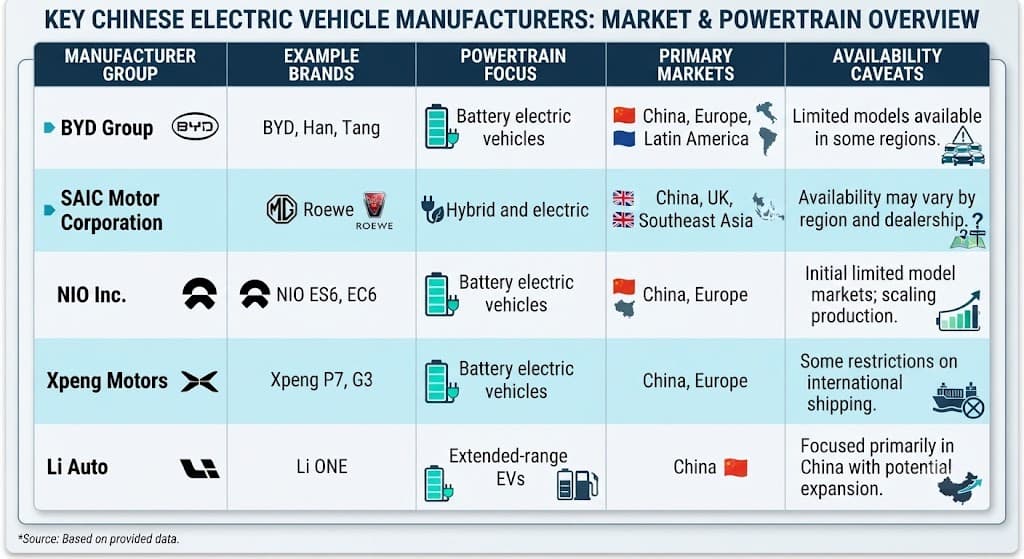
In this rapidly changing landscape, Chinese manufacturers, bolstered by robust national support and growing technological prowess, have taken center stage. BYD is especially noteworthy for its vast range of affordable options gaining traction in Europe and Latin America, while NIO is focusing on premium models and innovative battery-swapping technology. Brands like MG from SAIC are attracting price-sensitive consumers in markets such as the UK and Southeast Asia, capitalizing on the demand for hybrid solutions. Despite their strengths, these companies navigate obstacles such as regulatory challenges and supply chain limitations that impact availability outside China. Awareness of this competitive environment is essential for informed shoppers eager to invest in EVs in the burgeoning market.
2. BEV, PHEV, and Range-Extender Distinctions
Battery Electric Vehicles (BEVs), Plug-in Hybrid Electric Vehicles (PHEVs), and range-extender vehicles each offer distinct driving experiences and ownership dynamics. BEVs function exclusively on electric energy, promoting zero tailpipe emissions and benefiting from extensive charging infrastructure, appealing substantially to environmentally conscious buyers.
In contrast, PHEVs utilize a combination of an electric motor and a gasoline engine, permitting limited electric-only driving while preserving the flexibility of conventional fuel for longer journeys. This characteristic makes PHEVs an appealing choice for individuals hesitant to fully embrace electric mobility. Alternatively, range-extended vehicles also rely primarily on electric propulsion but incorporate a small gasoline engine that generates electricity, effectively increasing range without falling into the typical hybrid category.
Understanding these differences is crucial for prospective buyers—as BEVs frequently incur lower operating expenses but may trigger range anxiety, while PHEVs and range-extenders provide versatility for various driving behaviors, subsequently influencing consumer preference contingent upon individual lifestyles and travel requirements.
3. Technology, Battery, Software, and Affordability Trends
The electric vehicle (EV) sector is rapidly advancing, driven by significant developments in battery technology and software integration. Although lithium-ion batteries have primarily dominated the scene, manufacturers are actively exploring solid-state batteries, promising higher energy capacity and swifter charging capabilities. Leading companies such as BYD and CATL spearhead these innovations, pushing performance boundaries that are critical for alleviating consumer concerns over EV usability.
Another breakthrough is the integration of sophisticated software systems. Modern electric vehicles are increasingly outfitted with advanced driver-assistance systems (ADAS) and over-the-air (OTA) updates, enhancing safety features, functionality, and overall technological currency. This movement towards smarter vehicles not only improves the user experience significantly but also adds protective layer against potential cybersecurity threats.
Affordability remains a prime concern among consumers. While the upfront costs of EVs can be daunting, various incentives, including government subsidies and a decrease in battery costs—reportedly down by 89% over the past decade—are making these vehicles more financially viable. Moreover, China's emphasis on mass-market electric vehicles has produced competitively priced models like the Wuling Hongguang Mini EV, thereby democratizing access to electric mobility for consumers worldwide. As these technological advancements proceed, the EV terrain is increasingly becoming advantageous for price-sensitive shoppers.
4. Manufacturing and Export Role
Chinese manufacturers have transitioned into vital contributors within the global electric vehicle (EV) export market. Their capacity for extensive local production has significantly cut production costs while simultaneously scaling up output to accommodate international demand. This focus on high-quality manufacturing, paired with advancements in technology, empowers Chinese brands to deliver competitive EVs that captivate consumers worldwide.
In addition, the numerous global supplier networks underpinning this rapid sector growth ensure that manufacturers gain access to essential components—ranging from batteries to software—thus streamlining production processes and enhancing product quality. The implications for global trade are substantial; as China cements its foothold in the EV market, it reshapes global supply chains and alters competitive dynamics. This transformation not only opens up avenues for international partnerships but also presents new hurdles for traditional automotive incumbents, ultimately influencing the broader electric vehicle landscape and the global economy as a whole.
5. Availability, Tariffs, and Regulation by Region
The global landscape concerning the availability of Chinese electric vehicles (EVs) varies substantially, contingent upon diverse regional regulations, tariffs, and homologation processes. As Chinese manufacturers amplify their international footprints, prospective buyers must be mindful of these dynamics to inform their purchasing decisions effectively.
Export tariffs frequently impact the pricing and accessibility of Chinese EVs. For instance, in the European Union, protective tariffs can inflate costs, rendering these vehicles less competitive against established local and international brands. In contrast, nations actively fostering electric mobility, like Canada and specific ASEAN countries, might offer tariff exemptions or reductions to stimulate EV adoption, thereby improving access to Chinese models.
Regulatory compliance is another crucial aspect affecting market entry. Varying homologation processes across regions require vehicles to comply with specific safety, environmental, and performance standards. This variability can impede the introduction of Chinese EVs, as manufacturers are compelled to invest time and resources ensuring conformity. For example, the U.S. mandates rigorous emissions testing and safety certifications that can yield challenges for export-ready Chinese models.
Consequently, savvy consumers must navigate these regulatory frameworks to develop a clear understanding of how availability may vary in their respective markets and how it could guide their purchasing decisions.
6. Buyer Verification Checklist
- Warranty Terms: Confirm the duration of the warranty (e.g., 3-5 years) and the components it covers, including the battery and drivetrain.
- Local Service Networks: Ensure the presence of authorized service centers nearby and assess their reputation for customer service.
- Parts Availability: Check the accessibility of replacement parts locally or online, focusing on timeline clarity for ordering and delivery.
- Compliance with Local Regulations: Verify that the vehicle adheres to local safety standards and emissions requirements, especially for electric vehicles.
- Charging Infrastructure: Evaluate the availability of compatible charging stations and any incentives for EV owners in your region.
- Consumer Reviews: Seek feedback from current owners for insights on reliability and customer support experiences.
- Insurance Options: Investigate insurance costs and coverage specifically focused on electric vehicles in your area.
- Resale Value: Research the resale market for the chosen brands and models to understand potential value retention.
This comprehensive checklist enables discerning buyers to account for vital components before finalizing their decisions, fostering a confident approach to investing in the burgeoning Chinese EV market.
The Future of Electric Mobility: Trends Shaping the EV Industry
The evolution of Chinese electric vehicles highlights the plethora of choices available to consumers, each with unique features and benefits. Understanding key takeaways—such as manufacturer reputations, advancements in technology, and existing regulations—is pivotal for buyers. For those looking to make wise purchasing decisions, evaluating these aspects with discernment will empower them to navigate the diverse market options effectively. While the future of the Chinese EV landscape is promising, characterized by rapid innovation and heightened competition, remaining informed will allow consumers to make intelligent, sustainable decisions that align with their unique needs and budgets.
Sourcing Credibility in the EV Market
To ensure the integrity of this guide, we consulted reputable sources including the China Association of Automobile Manufacturers (CAAM), Bloomberg New Energy Finance, and the International Energy Agency (IEA). Our analysis was grounded in thorough market investigations and consumer surveys, emphasizing the need for timely and credible information in the swiftly evolving EV sector to maintain our commitment to readers' trust.
Related Posts

How Car Air Fresheners Improve the Driving Experience

6 Best Dash Cams With Night Vision and Parking Mode in 2026
OBD2 Scanners Explained How To Diagnose Your Car Using Your Phone

Best Tire Inflators for Cars Portable Air Compressor Review Guide for 2026

Best New Cars for Daily Driving in 2026 Maximum Comfort, Minimum Fuel Costs